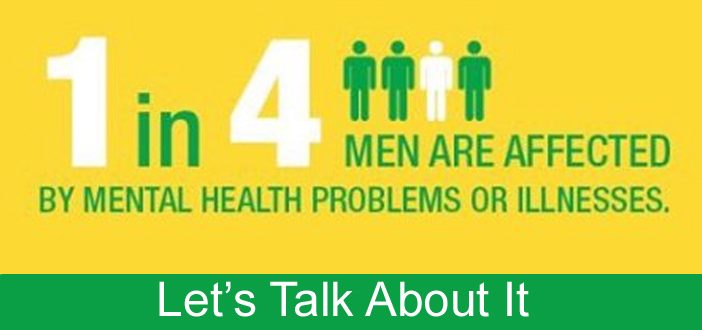
Low treatment rates endanger workers' careers and business' performance. Psychological health issues affect lots of workers a fact that is typically neglected due to the fact that these disorders tend to be concealed at work. Scientists examining arise from the U.S. National Comorbidity Survey, a nationally representative study of Americans ages 15 to 54, reported that 18% of those who were utilized stated they experienced signs of a mental health disorder in the previous month.
At the exact same time, managers may wish to assist however aren't sure how to do so. And clinicians might find themselves in unfamiliar territory, at the same time attempting to deal with a client while providing recommendations about handling the health problem at work - how teaching affects your mental health. As an outcome, mental health conditions frequently go unacknowledged and untreated not only harming a person's health and profession, but also decreasing productivity at work.
However accomplishing these goals needs a shift in attitudes about the nature of mental illness and the recognition that such a rewarding achievement takes effort and time. Here's a quick guide to the most typical psychological health issues in the office, and how they impact both staff members and companies. Signs of psychological health disorders might be various at work than in other scenarios.
Research studies recommend that treatment improves work performance, however is not a quick fix (how gambling affects mental health). Symptoms of common issues such as anxiety, bipolar disorder, attention deficit disorder (ADHD), and anxiety are all explained in the Diagnostic and Statistical Manual of Mental Illness, Fourth Edition (DSM-IV). However signs tend to manifest differently at work than they do in your home or in other settings.
Everything about How Being Negative As Teen Affects Our Mental Health
Research studies assessing the full work effect of mental health disorders typically utilize the World Health Organization (WHO) Health and Work Performance Survey, which not just asks staff members to report the number of days they contacted sick, but likewise asks to assess, on a graded scale, how efficient they were on the days they in fact were at work.
In one study analyzing the financial effect of 25 chronic physical and psychological illness, researchers surveyed 34,622 employees at 10 companies. The researchers arranged the amount of money the business spent on medical and drug store costs for workers, in addition to employees' self-reported absence and lost performance, utilizing the WHO questionnaire.
Numerous of the research studies in this field have concluded that the indirect expenses of mental health conditions especially lost performance surpass business' spending on direct costs, such as medical insurance contributions and drug store costs. Provided the normally low rates of treatment, the scientists recommend that companies must invest in the psychological health of employees not only for the sake of the employees but to Click here! improve their own bottom line.
One study of a nationally representative sample reported that about 6% of employees experience signs of depression in any given year. Although the DSM-IV notes low state of mind as the specifying symptom of depression, in the workplace this condition is more likely to manifest in behaviors such as anxiousness, uneasyness, or irritation and in physical complaints, such as a preoccupation with pains and discomforts - how mental health affects physical health.
How Mental Health Affects How Many Americans can Save You Time, Stress, and Money.
They also might be tired out at work, partially as an outcome of the mood condition or since they are having trouble sleeping in the evening. Anxiety might likewise hinder judgment or cloud decision making. Researchers who evaluated staff member responses to the WHO questionnaire discovered that employees with depression reported the equivalent of 27 lost work days per year 9 of them due to the fact that of ill days or other time gotten of work, and another 18 showing lost efficiency.
Part of the problem may be lack of treatment. In one research study, only 57% of staff members with signs of major depression said they had actually gotten mental health treatment in the previous 12 months. Of those in treatment, less than half about 42% were receiving treatment considered sufficient, on the basis of how consistent it was with published guidelines about very little standards of care.
is typically characterized by cycling in between raised (manic) and depressed state of minds. In a manic phase, employees might appear highly energetic and imaginative, however actual productivity might suffer. And during full-blown mania, a person may end up being self-aggrandizing or disruptive, flout workplace guidelines, be extremely aggressive, and make mistakes in judgment (such as spending too much a spending plan).
Although mania may be more obvious at work, the research suggests that the depressive stage of bipolar affective disorder can hinder efficiency more than the manic phase. One nationally representative research study estimated that about 1% of American workers suffer from bipolar affective disorder in any year. Based on staff member reactions to the WHO questionnaire, the researchers approximated that employees with bipolar condition lost the equivalent of about 28 work days each year from ill time and http://kylerdtoq399.yousher.com/more-about-how-nutrition-affects-mental-health-pubmed other lacks, and another 35 in lost efficiency.
What Does How Mental Health Affects Physical Health Do?
In a departure from findings about treatment rates for other psychological health disorders, about two-thirds of staff members with bipolar disorder said they had gotten treatment for it. However the likelihood of receiving sufficient care depended on the type of clinician they saw. Just about 9% of those who looked for care from general professionals got care in keeping with released standards for bipolar condition, compared with 45% of those who looked for care from psychological health professionals.
Staff members might require continuous peace of mind about performance. In some cases, similar to depression, physical signs or irritability may be obvious. Anxiety conditions impact about 6% of the population at some point in life, but normally go undiagnosed for 5 to 10 years. And only about one in three individuals with a diagnosed disorder gets treatment for it - how does socioeconomic affects latino mental health studies.
It is most likely not unexpected, then, that stress and anxiety conditions cause considerable work impairment - how sleep affects mental and physical health. Generalized stress and anxiety condition, for instance, leads to work problems (as determined by ill days and lost productivity) comparable to that credited to significant anxiety. is often considered a problem only in youth, however it likewise affects adults.
In the office, symptoms of ADHD may manifest as poor organization, failure to meet deadlines, inability to handle workloads, issues following instructions from supervisors, and arguments with colleagues. Workplace performance and the staff member's career might suffer. Research studies estimate that people with ADHD may lose 22 days each year (a combination of sick days and lost efficiency), compared with individuals without the disorder.
Some Ideas on Why Mental Health Affects Every Thing I Do You Should Know
They are likewise two to four times as most likely as other staff members to be ended from a job. Treatment rates among workers with ADHD are specifically low. In the United States, for example, only 13% of workers with ADHD reported being dealt with for this condition in the previous 12 months.
The authors of such studies encourage workers and employers to believe of psychological healthcare as a financial investment one that's worth the up-front time and cost. Most of the research on the costs and benefits of treatment has been done on workers with Additional info anxiety. The studies have discovered that when anxiety is effectively treated, companies reduce job-related accidents, ill days, and staff member turnover, along with improve the variety of hours worked and worker performance.